Blog
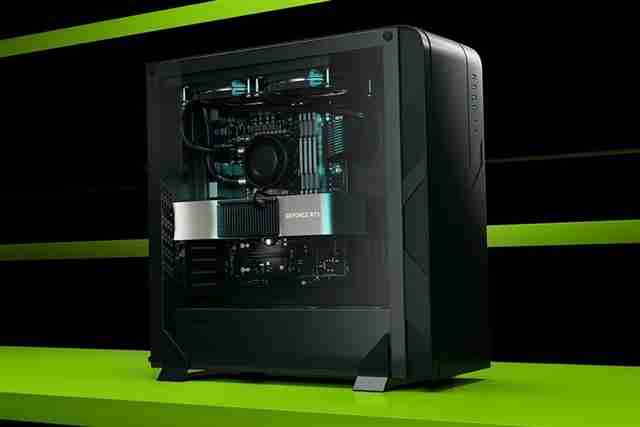
Discover the Power and Flexibility of Compact AI Servers For Large Language Models (LLMs) to Boost Productivity. Building the Perfect AI Infrastructure: A Close-Up Look at Essential Components.
Discover the Power and Flexibility of Compact AI Servers For Large Language Models (LLMs) to Boost Productivity. Building the Perfect AI Infrastructure: A Close-Up Look at Essential Components.
Harness the Power of Large Language Models (LLMs) to Boost Productivity
I believe that both corporate and individually-owned LLMs hold the key to significantly boosting productivity. The future of open-source LLMs is promising, with ongoing research and development pushing the boundaries of what these models can achieve. As technology advances, we can expect more powerful and versatile open-source LLMs applicable to a wide range of tasks.
To help small businesses build test and scale-up cost-efficient simpele basis AI infrastructure, here is my advice on the minimum requirements for running a local open-source LLM. You can clone your hardware and easily create and scale up clusters with a hypervisor if you want to expand your test lap. You can always invest later in a professional GPU server for your local on-premise data center.
AI Server / PC Requirements
Operating System: Linux / Ubuntu
Why Linux is Ideal for LLM AI Servers
Linux provides the perfect foundation for LLM AI servers due to its open source flexibility, robust security, and extensive support for AI tools. The operating system is efficient, stable, and cost-effective, which is crucial for training and running advanced language models. Additionally, Linux benefits from a strong community and professional support, making the implementation and optimization of complex AI applications easier.
Processor / CPU: AMD Ryzen 9 5900X
- The Ryzen 9 5900X is a 12-core, 24-thread processor from AMD. It operates at a base frequency of 3.7 GHz (4.8 GHz Turbo Boost) and has a 64MB L3 cache, 6MB L2 cache, and a 105W TDP. A fast CPU is crucial for LLM models, especially when working with large datasets. While GPUs handle the bulk of neural network computations, CPUs play a critical role in data preprocessing, model setup, and coordination.
Memory (RAM): 64 GB
- RAM is essential for LLM models because these models require a significant amount of memory to function efficiently. LLMs often have tens or even hundreds of gigabytes of parameters, which need to be loaded into memory during training and inference. DDR4 or DDR5 RAM with high bandwidth and capacity is recommended to handle the substantial memory demands of LLM training setups. Without sufficient RAM, memory-related bottlenecks can occur, leading to slow performance or even failure to run the model. Therefore, having enough RAM is crucial for running LLM models effectively.
Graphics Processing Unit (GPU): NVIDEA GeForce RTX 3060
- Ray Tracing: The NVIDEA RTX 3060 boasts 128 RT Cores, enabling fast and efficient ray tracing, crucial for AI and LLM models relying on complex graphics and simulations.
- Tensor Cores: The NVIDEA RTX 3060 features 384 Tensor Cores, designed to accelerate AI and deep learning workloads, making tasks like natural language processing and image recognition more efficient.
- 6th Gen NVIDIA Tensor Cores: These provide improved performance and efficiency for AI and LLM workloads, resulting in faster training and inference times.
- Memory Storage: With 12 GB of GDDR6 memory, the RTX 3060 offers ample storage for large datasets and models, ensuring smooth and efficient AI and LLM application performance.
- Fast Data Transfer Rates: The PCIe 4.0 x16 interface allows fast data transfer rates, enabling the RTX 3060 to handle demanding AI and LLM workloads with ease.
- CUDA Cores: The RTX 3060 is equipped with 3584 CUDA Cores, which are vital for parallel processing tasks. CUDA Cores perform the general-purpose computations required for both training and running LLMs, providing the raw processing power needed to handle large datasets and complex algorithms efficiently. Their ability to handle multiple threads simultaneously makes them ideal for the computational demands of LLMs, enhancing the overall performance and speed of model training and inference.
Solid State Drive (SSD): 2 TB M.2 NVMe SSD
Why M.2 NVMe SSD Storage is Crucial for AI and LLM Workloads
When working with large language models (LLMs), fast and reliable storage is essential to handle the vast amounts of data these models require. A 2 TB M.2 NVMe SSD offers the perfect combination of speed, capacity, and efficiency, ensuring quick access to datasets and minimizing bottlenecks during training and inference.
Speed: M.2 NVMe SSDs are significantly faster than traditional SATA SSDs and HDDs, offering lightning-fast read and write speeds. This speed is crucial for loading large datasets and models into memory, resulting in quicker training times and smoother performance.
Form Factor: The M.2 form factor is compact, making it ideal for modern AI servers and PCs. Despite its small size, it offers the high storage capacity and performance needed for demanding AI tasks, without taking up much space on the motherboard.
Reliability: With no moving parts, M.2 NVMe SSDs are more reliable than HDDs, reducing the risk of data loss due to mechanical failure. This reliability is vital when dealing with critical data and long training sessions, ensuring that your AI projects run smoothly.
Efficiency: The reduced latency and increased throughput of M.2 NVMe SSDs optimize the overall performance of AI and LLM workloads. This makes them an essential component in any AI server setup, providing the storage speed necessary to keep up with the high demands of LLM processing.
By investing in a high-capacity M.2 NVMe SSD, you ensure that your AI infrastructure can handle the demanding storage requirements of LLMs, offering a solid and efficient foundation for building and scaling your AI capabilities.
Discover the Power and Flexibility of Compact AI Servers
Unleash the potential of your AI projects with our sleek, compact local servers equipped with cutting-edge GPUs. Designed for a spectrum of uses—from groundbreaking scientific research and advanced machine learning to insightful data analysis and innovative prototyping—these servers offer unparalleled performance and versatility. Experience the ultimate in cost-effective AI development and testing, all without the constraints and costs of cloud services. Empower your work with technology that’s as powerful as it is refined.
Conclusion
Building a powerful and efficient AI infrastructure for tasks like running large language models (LLMs) hinges on choosing the right components. While each part plays an important role, the GPU—like the NVIDIA GeForce RTX 3060—stands out as the most crucial element, driving the heavy computations required for AI workloads. Supported by a stable Linux/Ubuntu OS, the processing power of an AMD Ryzen 9 5900X CPU, 64 GB of RAM to manage large datasets, and fast, reliable storage with a 2 TB M.2 NVMe SSD, your AI setup is equipped to handle the demands of modern AI applications. By combining these components with open-source solutions like Llama 3.1, you can create a scalable, cost-effective AI environment that maximizes productivity and future-proofs your business.