Blog
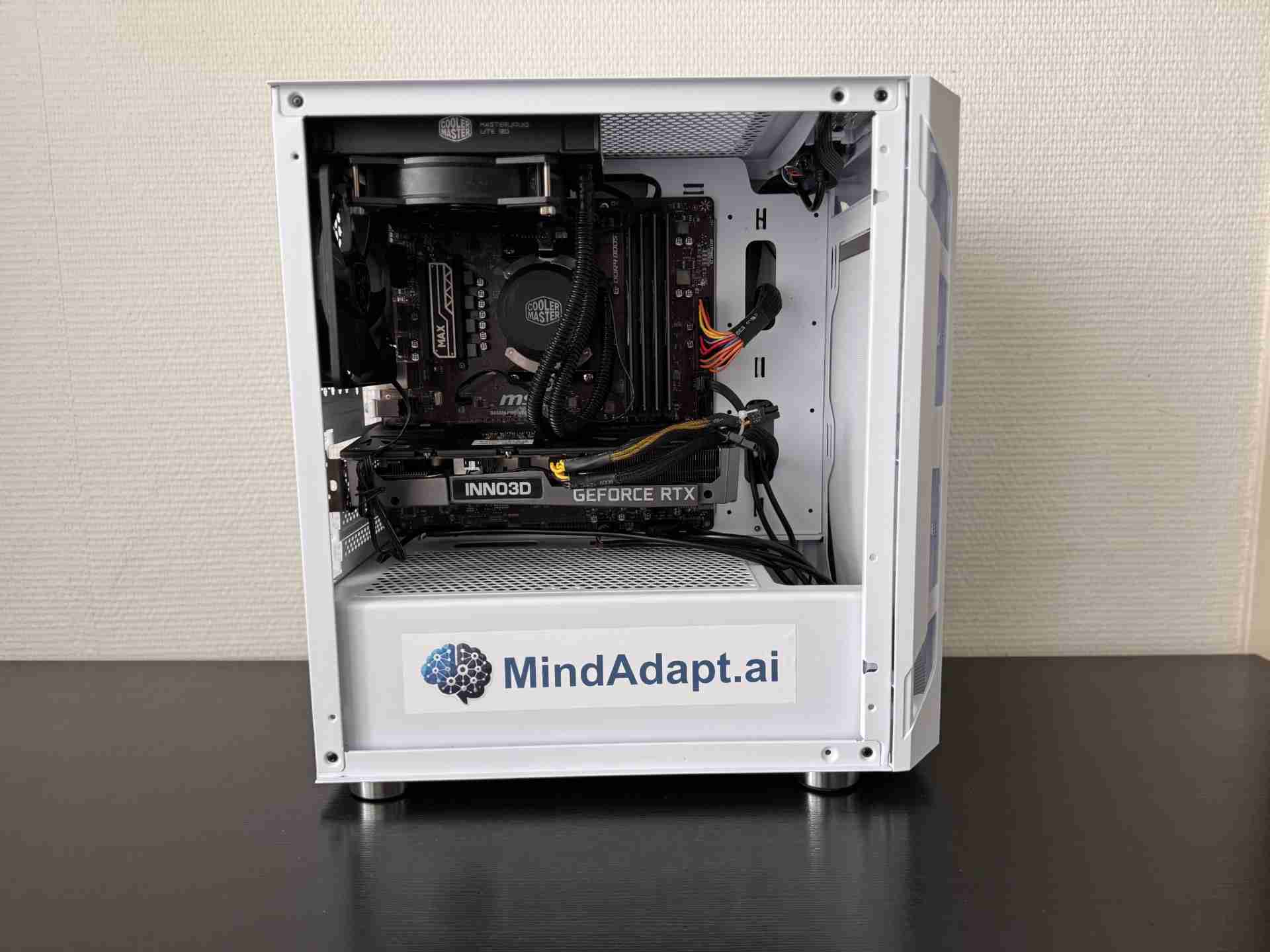
🧠 Open Source LLM Models: Inference & Local Implementation for Performance, Privacy and Cybersecurity.
In the realm of Large Language Models (LLMs), inference refers to the process by which a trained model processes new data to generate predictions or responses. Optimizing the inference architecture is crucial for the efficient and cost-effective deployment of LLMs, especially for small businesses that prioritize privacy and cost-efficiency.
Why is this relevant?
Performance and Efficiency: A well-designed inference architecture ensures faster response times and lower energy consumption, which is essential for local deployments.
Cost Savings: Selecting the appropriate hardware and software can reduce operational expenses while optimizing performance.
Security: A local inference architecture minimizes reliance on external cloud services, enhancing control over sensitive data.
Open-source Large Language Models (LLMs) are revolutionizing data processing, communication, and automation. They offer a transparent and flexible alternative to proprietary systems like ChatGPT. This article explores three critical layers for implementing LLMs:
- The Hardware Layer: Impact of GPUs, CPUs, and system RAM on performance.
- The Software and Security Layer: Importance of open-source operating systems and web interfaces.
- The Fine-Tuning Layer: Optimizing LLMs with custom data and system prompts.
We also discuss why local deployment is ideal for organizations prioritizing privacy and cost-efficiency.
1. The Hardware Layer: Power, Efficiency, and Balance
GPUs, CPUs, and VRAM: What Do You Need?
The GPU is central to LLM applications, excelling in parallel processing essential for deep learning and natural language processing tasks.
- CUDA Cores: NVIDIA GPUs feature thousands of CUDA cores that accelerate complex computations, leading to faster responses and improved performance.
- VRAM: This memory temporarily stores model data. For instance, a model like DeepSeek 14B requires approximately 9GB of VRAM and operates optimally on a GPU with at least 12GB VRAM.
Note: CPUs and system RAM are also crucial. While GPUs handle intensive computations, CPUs manage model orchestration, data preprocessing, and threading.
- Multi-Core CPU: A robust multi-core CPU (e.g., AMD Ryzen 9 or Intel i9) prevents performance bottlenecks.
- System RAM: A minimum of 32GB RAM is recommended to efficiently load and process data batches. Insufficient RAM can lead to reliance on slower storage solutions, reducing performance.
A study published in Electronics emphasizes the importance of a balanced hardware configuration for efficient LLM operations, highlighting the roles of GPUs, CPUs, and adequate system RAM in achieving optimal performance and energy efficiency.
Consumer Hardware vs. Datacenter Hardware
For small to medium-sized enterprises (SMEs), local AI servers utilizing consumer-grade hardware can be a cost-effective solution.
Advantages:
- Cost Savings: Lower initial investment and energy consumption.
- Data Control: Complete oversight of data and security protocols.
Disadvantages:
- Durability: Consumer GPUs may not withstand continuous, 24/7 operation.
- Support: Limited warranties and professional support compared to datacenter-grade hardware.
Case Study: An SME employs an RTX 4090 with 24GB VRAM to run an internal AI assistant, effectively reducing cloud service expenses.
2. The Software and Security Layer: Open Source and Data Control
A robust software infrastructure is vital for the secure deployment of LLMs.
Linux vs. Windows: Which OS Is Suitable?
- Linux: Preferred for AI applications due to its stability, security, and open-source nature.
- Windows: With WSL2 and CUDA support, it’s a viable option but may introduce additional overhead.
Recommendation: Utilize containerization tools like Docker / Ollama to run LLMs securely and in isolation.
Research indicates that deploying open-source AI models on Linux systems enhances security and data control, as organizations can tailor the environment to their specific needs, reducing reliance on third-party cloud services.
Open-Source Web UIs: Control and Usability
Implementing an open-source web interface, such as Open WebUI, facilitates user interaction with LLMs without requiring extensive technical expertise.
Benefits:
- User-Friendly: Intuitive interfaces make AI accessible to a broader audience.
- Security: Maintains data within the organization’s infrastructure, mitigating risks associated with external data transmission.
- Customization: Allows for tailored functionalities to meet specific organizational requirements.
Case Study: A company deploys Open WebUI to provide employees with access to an AI chatbot, ensuring sensitive data remains internal.
3. The Fine-Tuning Layer: Tailoring AI to Your Needs
Fine-Tuning and System Prompts
Customizing an LLM with proprietary data enhances its accuracy and relevance for specific tasks.
- System Prompts: Strategically designed prompts can guide the model’s behavior and response style without extensive retraining.
Example of a System Prompt:
“You are an expert AI assistant providing concise, accurate, and contextual information. If uncertain, acknowledge it and assist in finding the solution.”
Case Study: A customer service department fine-tunes an LLM with historical interaction data and implements a system prompt to deliver consistent and efficient responses.
Conclusion: Open-Source AI as the Future for SMEs
Investing in powerful yet affordable hardware, establishing a secure software ecosystem, and employing effective fine-tuning strategies enable SMEs to leverage open-source LLMs without relying on expensive cloud services.
Interested in implementing a local AI model? Contact us to explore the possibilities!
Scientific references and following studies.
- “The Open Source Advantage in Large Language Models (LLMs)”
This paper discusses how open-source frameworks like LLaMA and Mixtral democratize access to LLMs, fostering collaboration and supporting diverse applications. https://arxiv.org/abs/2406.11424?utm_source=chatgpt.com - A Tutorial on Open-Source Large Language Models for Behavioral Science”
This tutorial introduces the Hugging Face ecosystem, demonstrating applications of open-source LLMs in behavioral research, and emphasizes their transparency and reproducibility.https://pubmed.ncbi.nlm.nih.gov/39147947/ - Evaluating the Efficacy of Open-Source LLMs in Enterprise-Specific RAG Systems: A Comparative Study of Performance and Scalability”
This study analyzes the integration of open-source LLMs into enterprise-specific Retrieval-Augmented Generation tasks, highlighting their performance and scalability as viable alternatives to proprietary solutions.https://arxiv.org/html/2412.12004v2?utm_source=chatgpt.com