Blog

Figure 1: The three requirements of a successful generative AI
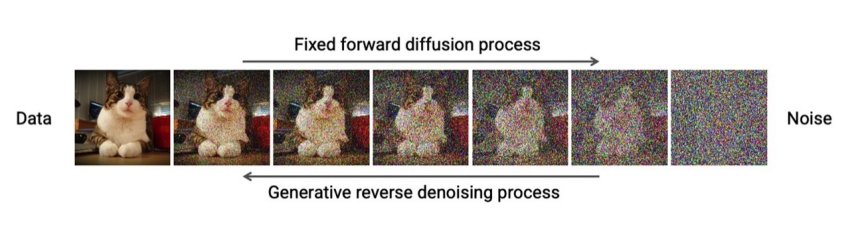
Figure 2: The diffusion and denoising process.
Diffusion Models: A diffusion model can take longer to train than a variational autoencoder (VAE) due to its two-step process, but this approach allows for the training of hundreds, or even an infinite number, of layers. This extensive layering capability generally results in higher-quality output when developing generative AI models.
Diffusion models are also considered foundation models because of their large scale, high-quality outputs, and flexibility, making them ideal for generalized use cases. However, the reverse sampling process in diffusion models is time-consuming, making the execution of these foundation models relatively slow.
For a deeper dive into the mathematics behind diffusion models, check out this blog post.
Variational Autoencoders (VAEs): VAEs consist of two neural networks known as the encoder and decoder. The encoder compresses the input into a smaller, dense representation, preserving the essential information needed for the decoder to reconstruct the original input while discarding irrelevant data. This encoding-decoding process creates an efficient latent data representation, allowing for easy sampling of new latent vectors that the decoder can use to generate novel data.
While VAEs can generate outputs, such as images, more quickly than diffusion models, the detail and quality of these images are generally lower.
Generative Adversarial Networks (GANs): Introduced in 2014, GANs were the most popular generative model before the rise of diffusion models. GANs consist of two neural networks: a generator, which creates new examples, and a discriminator, which attempts to distinguish between real (domain-specific) and fake (generated) content.
These models are trained together, with the generator improving its output as the discriminator becomes better at identifying generated content. This iterative process continues until the generated content is nearly indistinguishable from real data.
Although GANs can produce high-quality samples quickly, they often struggle with diversity, making them more suitable for domain-specific data generation.
Transformer Networks: The underlying architecture of a generative model is crucial, and one of the most influential architectures is the transformer network. Unlike recurrent neural networks, transformers process sequential data non-sequentially.
Transformers excel in text-based generative AI applications thanks to two key mechanisms: self-attention and positional encodings. These techniques allow the model to effectively capture relationships between words over long distances, making transformers particularly powerful for tasks involving natural language processing.
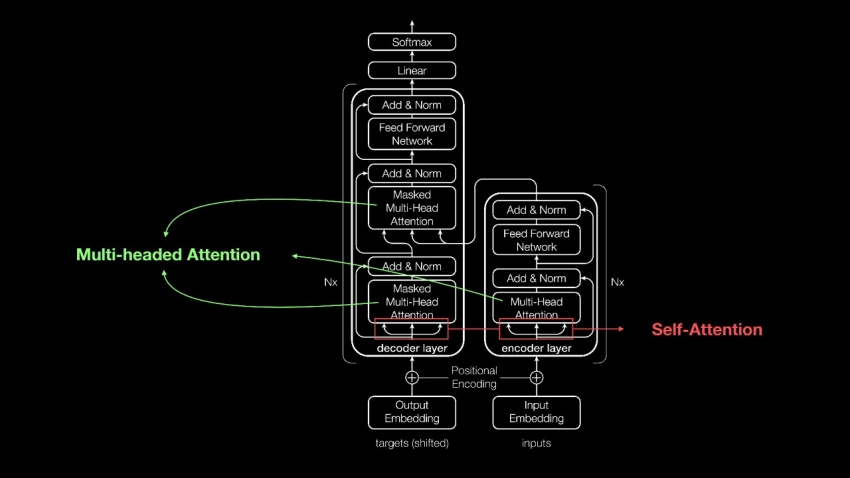
Figure 3: Image from a presentation by Aidan Gomez, one of eight co-authors of the 2017 paper that defined transformers.
Self-Attention and Positional Encoding
A self-attention layer assigns a weight to each part of an input, indicating its significance relative to the rest of the input. This weighting allows the model to focus on the most important elements in context. Positional encoding, on the other hand, provides a representation of the order in which input tokens (such as words) appear, preserving the sequence information that’s crucial for understanding context.
Transformer Architecture
A transformer is composed of multiple layers, or blocks, that work in unison to process and interpret streams of tokenized data. These layers include self-attention layers, feed-forward layers, and normalization layers. Together, they enable the transformer to effectively decipher and predict patterns in various types of data, such as text, protein sequences, or image patches.
Applications of Generative AI
Generative AI is a versatile tool that enhances workflows across a wide range of industries, benefiting creatives, engineers, researchers, scientists, and more. The applications are vast, with possibilities that extend to virtually any field.
Generative AI models can process inputs such as text, images, audio, video, and code, and generate new content across these modalities. For instance, a model might generate an image from a text description, create a song from an image, or convert video content into text. The cross-modal capabilities of generative AI open up innovative opportunities for content creation and transformation.

Figure 4: The diagram shows possible generative AI use cases within each category.
Popular Generative AI Applications
Language: Language is one of the most advanced domains in generative AI. Large language models (LLMs) are particularly notable, excelling in tasks like essay generation, code development, translation, and even the interpretation of genetic sequences.
Audio: Generative AI is also making strides in music, audio, and speech. Models can create songs and audio clips based on text inputs, recognize objects in videos and generate corresponding sounds, and even compose custom music.
Visual: Visual applications are among the most popular uses of generative AI. These include creating 3D images, avatars, videos, graphs, and other illustrations. Generative AI offers flexibility in producing images with various aesthetic styles and provides tools for editing and modifying visuals. It can generate graphs for chemical compounds and molecules, aiding drug discovery, create realistic images for virtual or augmented reality, produce 3D models for video games, design logos, enhance existing images, and much more.
Synthetic Data: Synthetic data is invaluable for training AI models when real data is scarce, restricted, or unable to cover all edge cases. Generative AI can create synthetic data across different modalities, helping to overcome data challenges. Through label-efficient learning, these models can reduce the costs associated with data labeling by generating augmented training data or learning internal data representations, enabling AI models to be trained with less labeled data.
Impact Across Industries
The impact of generative AI spans multiple industries, with its applications continuing to expand.
Automotive: In the automotive sector, generative AI is used to create 3D models and simulations for car development. Synthetic data also plays a crucial role in training autonomous vehicles, enhancing safety, efficiency, and flexibility while reducing risks and costs.
Natural Sciences: Generative AI is transforming the natural sciences, particularly in healthcare, where it aids in drug discovery by developing new protein sequences. It also automates tasks like scribing, medical coding, medical imaging, and genomic analysis. In meteorology, generative models help simulate the planet’s weather, improving forecasting and natural disaster prediction, thereby contributing to public safety and disaster preparedness.
Entertainment: Generative AI is revolutionizing the entertainment industry, from video games and films to animation, world-building, and virtual reality. Creators are using these models to streamline content creation, enhancing creativity and productivity.
Challenges of Generative AI
Generative AI is still an emerging field, with several areas ripe for improvement:
Computational Scale: Training generative AI models, which often contain billions of parameters, requires extensive computational resources. For instance, diffusion models may need millions or billions of images to train, necessitating massive compute power and expertise to manage large-scale infrastructure.
Sampling Speed: The large scale of generative models can lead to latency in generating outputs. This is particularly problematic for interactive applications like chatbots, AI voice assistants, and customer service tools, where responses must be immediate and accurate. The slow sampling speed of diffusion models, despite their high-quality outputs, is an area of concern.
Data Quality: High-quality, unbiased data is essential for training generative AI models. However, some domains suffer from a lack of sufficient data, such as 3D assets, which are costly to produce. Improving data availability and quality is critical for advancing generative AI.
Data Licensing: Obtaining commercial licenses for datasets or creating bespoke datasets for generative models is a significant challenge. This process is vital for avoiding intellectual property issues and ensuring the ethical use of data.
Companies like NVIDIA, Cohere, and Microsoft are working to address these challenges by providing services and tools that simplify the development and deployment of generative AI models at scale.
Benefits of Generative AI
Generative AI offers numerous benefits:
Content Creation: Generative AI can create new, original content, such as images, videos, and text, that rivals human-made content. This capability is particularly valuable in entertainment, advertising, and the creative arts.
Enhancing AI Systems: Generative AI can improve the efficiency and accuracy of existing AI systems, like natural language processing and computer vision. For example, it can generate synthetic data to train and evaluate other AI models.
Data Exploration: Generative AI allows for the exploration and analysis of complex data in new ways, helping businesses and researchers uncover hidden patterns and trends that might not be evident in raw data.
Automation and Efficiency: By automating and accelerating various tasks and processes, generative AI saves time and resources for businesses and organizations.
Overall, generative AI is poised to significantly impact a wide range of industries, making it a crucial area of AI research and development.
Note: The section “What are the Benefits of Generative AI?” was generated by the generative AI model ChatGPT, showcasing the technology’s capabilities.
https://www.nvidia.com/en-us/glossary/generative-ai/